By: Alaina Coats
Updated November 6, 2025
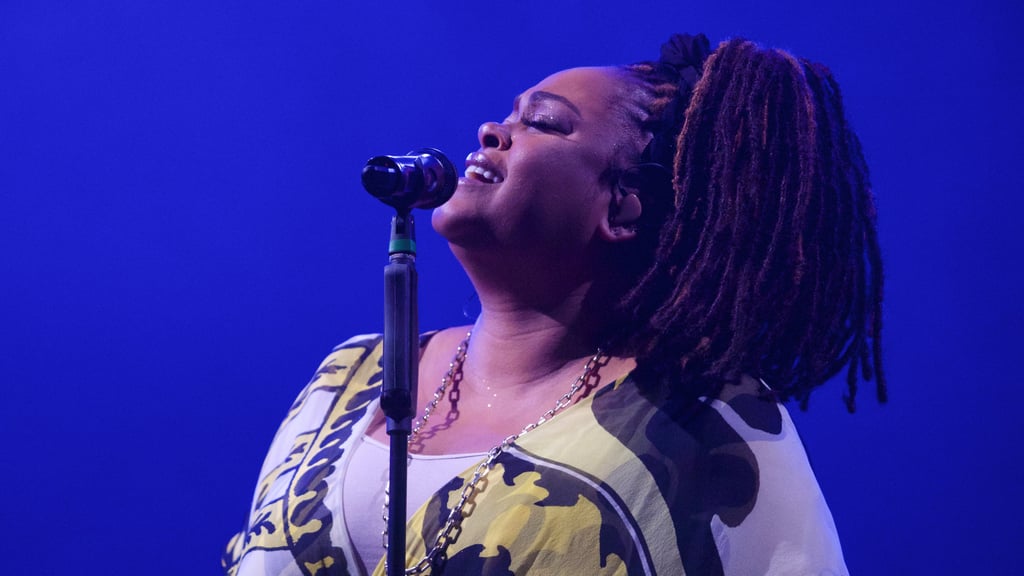
Now, more than ever, we need Jill Scott’s music.
We need its poetic intelligence, its warmth, its unapologetic celebration of Black womanhood, and its faith-rooted authenticity. In a time when voices of wisdom, love, and truth are drowned out by noise and cynicism, Jill Scott reminds us what it means to be whole, human, and connected.
Her voice, her words, her truth are timeless, necessary, and overdue.
Scott is a singer whose soulful melodies are inseparable from the messages they carry. Listeners do more than enjoy a song—they enter the world of Jill Scott. They glimpse her mind, her heart, her convictions, and her unwavering commitment to authenticity.
And right now, in a world that often feels fractured and silenced, we need her voice more than ever.
Scott’s lyrics are not just music; they are statements of selfhood, dignity, and power. If speculation holds true, Scott is a womanist with a womanist theology — giving voice to Black women’s experiences, struggles, and triumphs in ways that society still largely ignores. In songs like “Womanfesto,” “Rolling Hills,” “I Keep,” and “Still Here,” she boldly defines her worth and pushes back against the limiting myths and stereotypes assigned to Black women. She affirms that Black women are intellectual, nurturing, providers, and pillars of their communities.
In her own words, Scott refuses to be compartmentalized. “I don’t necessarily think of myself as a feminist, but I’m a whole person...—I’m a whole being! ... I don’t want to lose the all of me trying to be some piece of me,” she told Interview Magazine upon the release of Light of the Sun. Her music, therefore, is not only art; it is liberation, self-affirmation, and a roadmap for embracing the entirety of oneself in a world eager to divide and diminish.
Scott’s music is also deeply spiritual. Raised in faith and routinely attending services with her mother at the Kingdom Hall, she openly prays, petitions, and celebrates the divine in her lyrics. Hits like “Golden,” “A Long Walk,” “Hear My Call,” and “Jahraymecofasola” allow listeners to see God through her eyes—a God who hears, heals, and guides, unmediated by institutional authority or societal expectation. She once told BET that “Jahraymecofasola” embodies, “God is king to me with the fourth note of the diatonic scale to such an extent that I exult.” Through her spiritual honesty, Scott validates the experiences, faith, and voices of Black women in ways that the culture desperately needs.
Her music doesn’t just entertain—it heals, uplifts, and teaches. And the culture, quite simply, cannot afford to wait.